
How to Get Your Security Deposit Back: The 2026 Guide
You moved out. You cleaned the place. You handed over the keys and expected your deposit to show up within a few weeks. Instead, nothing. Or worse — a short check with a vague note about "cleaning fees" and "wall damage" that you're pretty sure weren't your fault.
You're not alone. Each year, millions of renters across the US lose part or all of their security deposit to deductions that range from questionable to outright illegal. The good news? Most of that money is recoverable — if you know how to get security deposit back from an uncooperative landlord. This guide walks you through the complete process, from understanding your legal rights to writing a demand letter that works. If you're wondering how to get security deposit back without hiring a lawyer, you're in the right place. Whether you just moved out or your landlord has been ignoring you for months, the steps to how to get security deposit back are the same — and they start with knowing your rights. Understanding how to get security deposit back is not just about sending a letter; it is about building a case from day one and following through until the money is in your hands.

How to Get Security Deposit Back by Understanding Your Rights
Before you can figure out your next move, you need to understand what your landlord is legally allowed to do — and what crosses the line.
State-by-State Deadlines
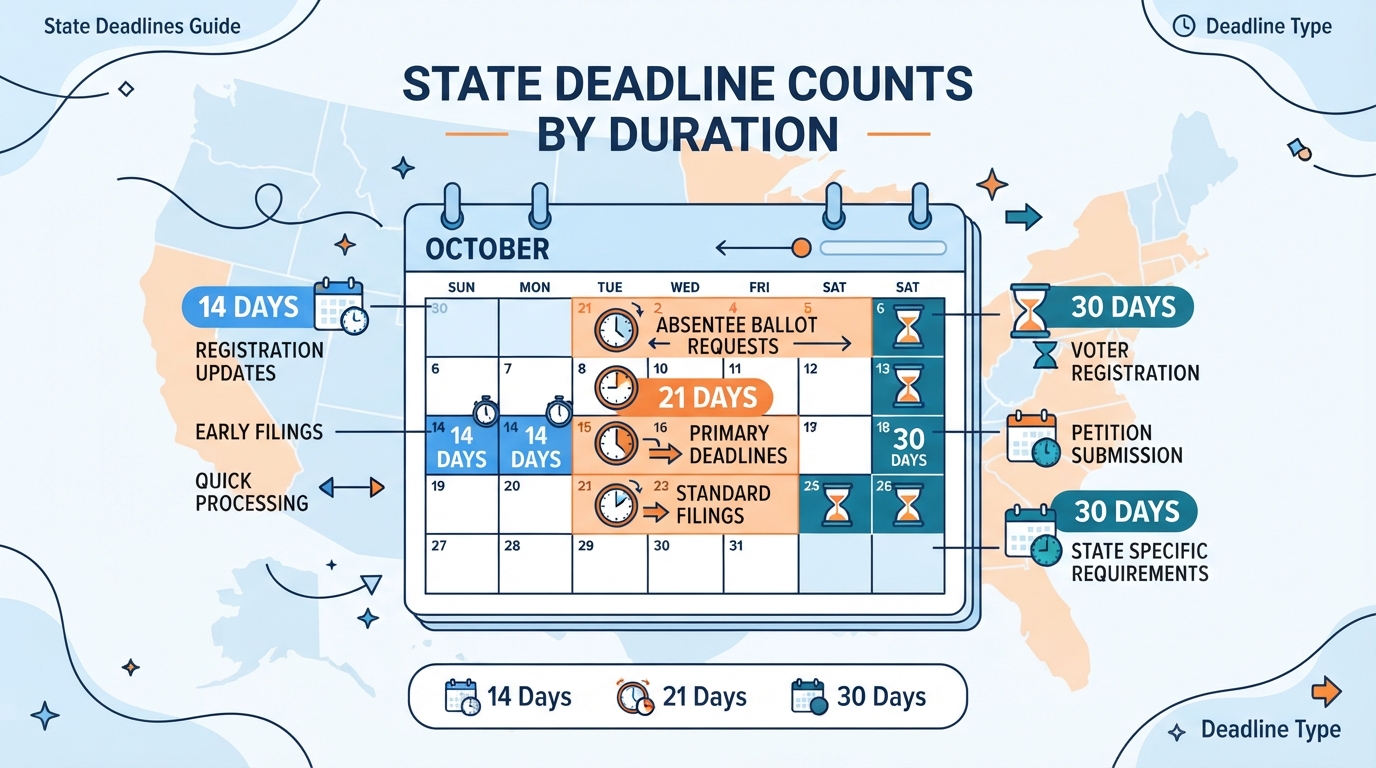
Every state sets a deadline for landlords to return your deposit or provide an itemized list of deductions after you move out. Miss that deadline, and in many states, the landlord automatically loses the right to keep any portion of it. Knowing how to get security deposit back starts with knowing exactly when your landlord legally owes you that money.
Here are the most common timelines:
| State | Deadline | Penalty for Missing It |
|---|---|---|
| California | 21 days | Up to 2x the deposit in damages |
| Texas | 30 days | Up to 3x the wrongfully withheld amount |
| New York | 14 days | Full deposit returned plus legal costs |
| Florida | 15 or 30 days | Forfeiture of deductions |
| Illinois | 30 days | 2x the deposit plus court costs |
| Washington | 21 days | Full deposit plus penalties |
The best way to speed up how to get security deposit back is to know your state's deadline cold. If your landlord misses it, you already have leverage. When a landlord won't return security deposit by the legal deadline, they're already on shaky ground — and a well-timed demand letter can turn that leverage into a check.
What Landlords Can and Cannot Deduct
Landlords are allowed to deduct for:
- Unpaid rent — straightforward, and hard to dispute if you owe it.
- Damage beyond normal wear and tear — this is where most fights happen. A broken window? That's damage. Faded paint from two years of sunlight? That's wear and tear.
- Excessive cleaning — only if the unit is significantly dirtier than when you moved in.
What they cannot deduct for:
- Normal wear and tear — scuffed floors, minor nail holes from hanging pictures, faded curtains, worn carpet in high-traffic areas.
- Routine maintenance — things like changing lightbulbs or replacing HVAC filters are the landlord's responsibility unless your lease says otherwise.
- Pre-existing damage — any damage present before you moved in. This is why move-in photos are gold.
A clear understanding of these rules is central to resolving your deposit dispute without going to court. Most disputes boil down to one side claiming damage and the other claiming normal wear — and the side with better documentation usually wins. If you're dealing with a landlord won't return security deposit situation, reviewing your state's specific deduction rules is your first strategic move.
Penalties for Bad-Faith Withholding
If your landlord keeps your deposit for reasons that don't hold up — or just ignores the deadline entirely — most states let you sue for penalties on top of the deposit amount. These range from double to triple the deposit, plus court costs. This is why a well-written demand letter is so effective: landlords know the math works against them. Understanding the penalties available in your state is a powerful motivator for both you and your landlord — and a key reason to learn how to get security deposit back the right way.
Build Your Case Before You Move Out
The strongest security deposit claims aren't won after the dispute starts. They're won months or years earlier, when you first walk through the door with your phone camera rolling. The process of how to get security deposit back begins before you even unpack your boxes.
The Move-In Inspection Advantage
Walk through the unit on day one and record a continuous video of every room. Open closets, check under sinks, zoom in on carpet stains and wall scratches. Take close-up photos of any existing damage. Save everything with timestamps.
Your landlord should provide a move-in inspection report. Fill it out honestly and keep a copy. If they don't offer one, create your own and send it to them in writing. This single step eliminates their ability to blame you for pre-existing damage.

Document Throughout Your Tenancy
Don't wait until move-out day to start gathering evidence. A few photos every couple of months, especially after maintenance issues, can make a big difference. If you reported a leaky faucet or a crack in the wall, keep those emails and texts. Building a paper trail early is one of the most effective ways to learn how to get security deposit back without a legal fight.
The Pre-Move-Out Strategy
About two weeks before your move-out date, do a thorough walkthrough. Patch small nail holes. Fix anything you can reasonably repair. Take "after" photos showing the unit in clean condition. Many states give you the right to request a pre-move-out inspection with your landlord — use it. It gives you a chance to address potential issues before they become deductions. Taking these preventive steps is a practical part of how to get security deposit back because it removes reasons for your landlord to deduct in the first place.
How to Get Security Deposit Back With a Demand Letter That Works
If your landlord has passed the statutory deadline without returning your deposit or sending an itemized statement, it's time to escalate. A security deposit demand letter is the single most effective tool you have. It resolves the majority of disputes without ever stepping into a courtroom, and mastering how to write a demand letter for security deposit is a skill every tenant should have. When a landlord won't return security deposit despite your polite requests, a formal demand letter shifts the dynamic from asking to demanding — and it works more often than you'd think. Understanding the structure of an effective security deposit demand letter is the difference between getting paid and getting ignored.
What Your Demand Letter Must Include
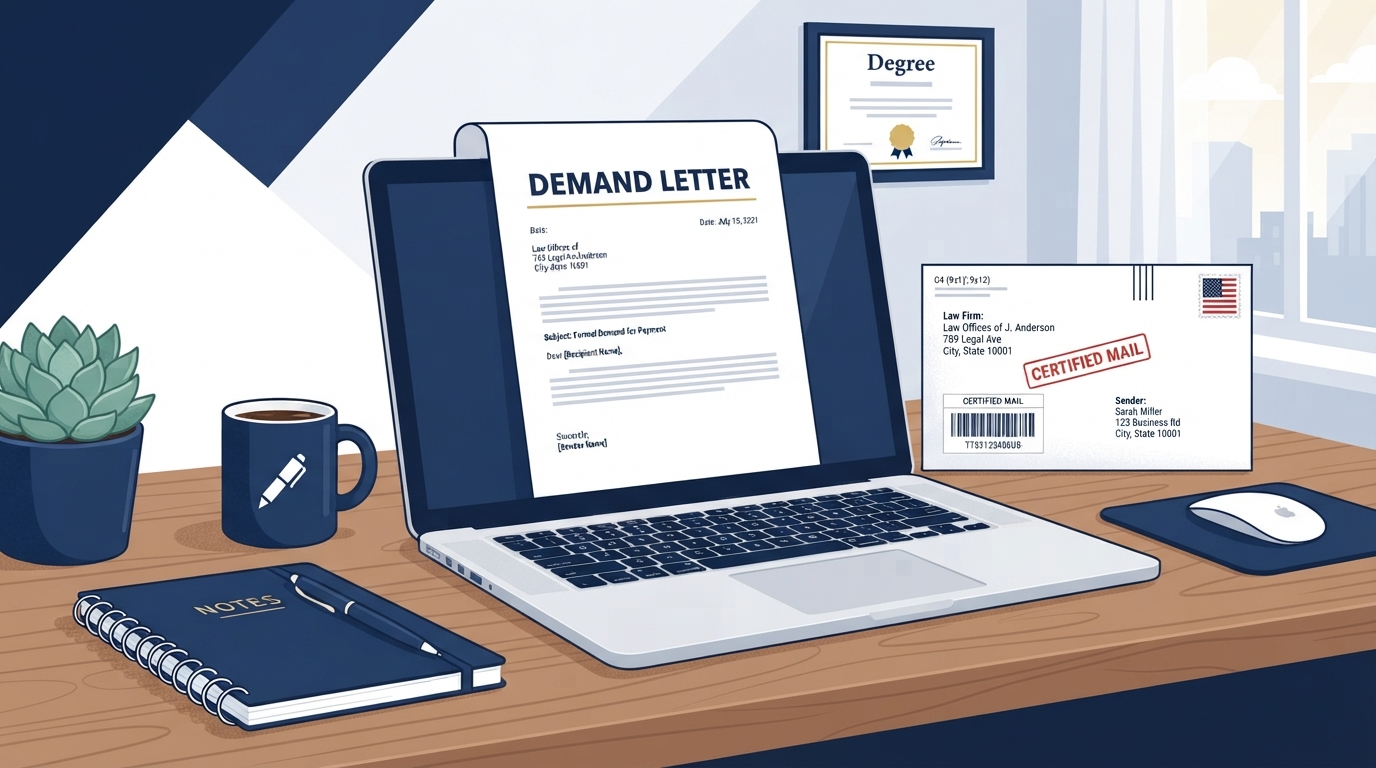
A demand letter that actually produces results has six essential elements. Including all six is critical for how to get security deposit back through formal demand — miss any one and your letter reads as a complaint, not a legal demand.
- Move-out date — precisely stated, because it starts the statutory clock.
- Deposit amount — the exact figure from your lease.
- Itemized challenge — address each deduction line by line, citing why it's invalid.
- State statute citation — the specific law your landlord violated. "Under California Civil Code § 1950.5" carries more weight than "you broke the rules."
- Deadline — typically 7 to 14 days from receipt.
- Certified mail requirement — state that you'll use certified mail for a verifiable paper trail.
Most landlords who receive a properly formatted demand letter with a clear statute citation will pay. The cost-benefit calculation is simple: return the deposit now, or pay the deposit plus penalties plus court costs later. That's why a well-structured demand letter is the single most effective step in how to get security deposit back for most tenants.
Sample Demand Letter Template
[Your Name]
[Your Current Address]
[City, State, ZIP]
[Date]

[Landlord Name]
[Landlord Address]

RE: Demand for Return of Security Deposit — [Rental Address]

Dear [Landlord Name],

I am writing to demand the return of my security deposit in the amount
of $[Amount] for the property at [Rental Address], which I vacated on
[Move-Out Date].

Under [State Statute], you had [X] days to return my deposit or provide
an itemized statement of deductions. That deadline passed on [Date].
As of today, I have not received either.

[If deductions: I dispute the following deductions: [list]. These are
normal wear and tear, not damage, and are not supported by receipts.]

Please return $[Amount] within 14 days. If I do not receive payment by
[Date], I will file in small claims court and seek statutory penalties,
which can reach up to [X] times the deposit amount under [State Statute].

This letter will be sent via certified mail with return receipt requested.

Sincerely,
[Your Name]
Common Mistakes That Weaken Your Letter
- Sending by regular mail — without certified mail, your landlord claims they never got it.
- Threatening beyond the law — stick to actual state remedies.
- Omitting the statute citation — a letter without a law reference is just a complaint.
- Setting an unreasonable deadline — 24 hours looks aggressive. 7 to 14 days is standard.
- Sending to the wrong address — use the legal notice address from your lease.
Avoiding these mistakes significantly improves your chances of how to get security deposit back through a single letter rather than a court case.
If you'd rather generate a legally sound security deposit demand letter with your state's statutes automatically included, Claimdra's demand letter tool handles the heavy lifting.
How to Send Your Demand Letter the Right Way
Writing the letter is half the battle. Sending it correctly is the other half — and it's the half most people get wrong. Knowing exactly how to get security deposit back means understanding both parts.
Why Certified Mail Is Non-Negotiable
Take your letter to the post office and send it via certified mail with return receipt requested. Cost: about $7 to $10. What you get: a tracking number, delivery confirmation, and a signed green card proving your landlord received it. This mailing method is a critical part of how to get security deposit back because it removes any plausible denial from your landlord.
That green card is your insurance policy. If you end up in small claims court, it's your Exhibit A. Regular mail, email, and text messages don't provide this level of proof. If you're wondering what to do if landlord doesn't return security deposit after your letter, that signed green card is your answer — it proves they were formally notified.
What Happens After You Send It
Days 1-3: Your letter is in transit. Track delivery status online.
Days 3-7: Your landlord signs for it. The green return receipt card arrives in your mailbox. Save it.
Days 7-14: The response window. Most landlords who plan to pay will respond during this period.
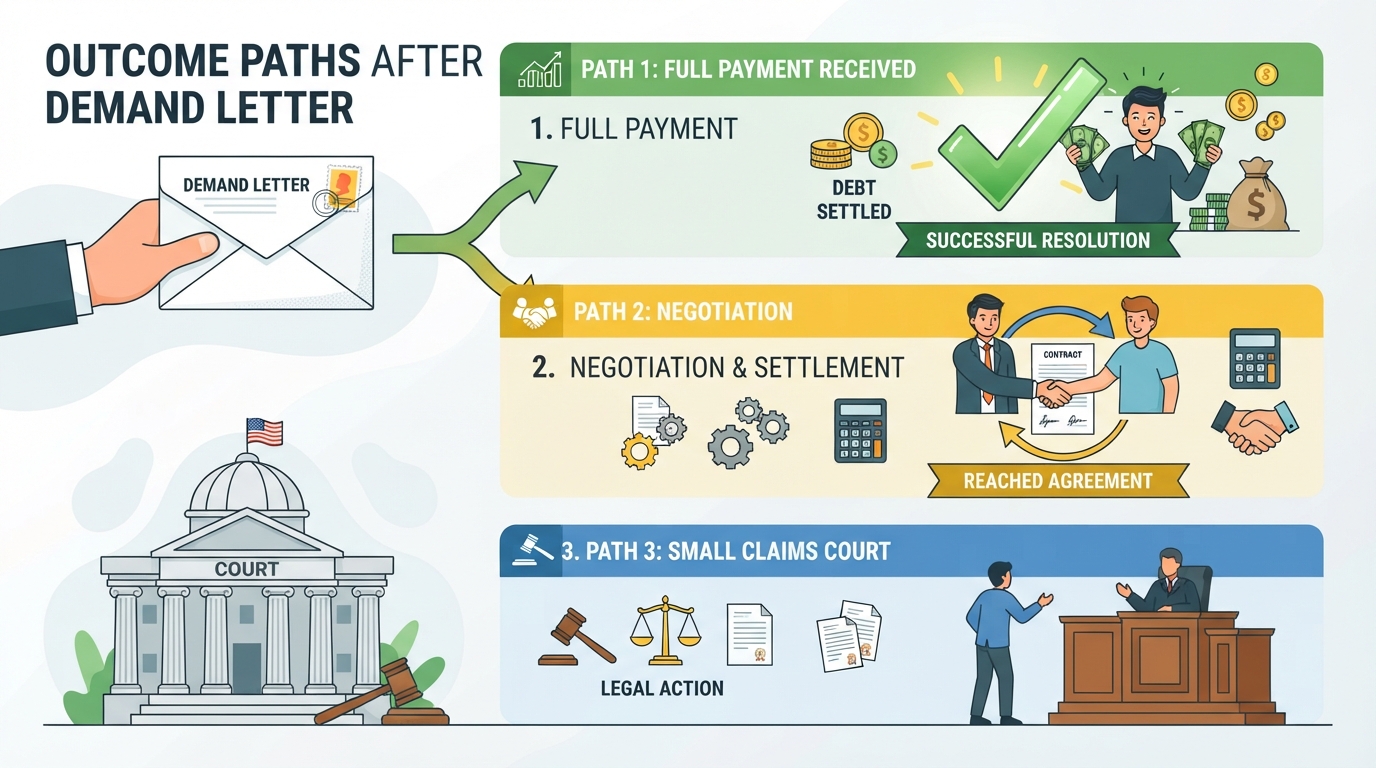
Three possible outcomes:
- Full payment — most common. You win. This is the ideal result of how to get security deposit back through a formal demand.
- Partial payment or negotiation — review their deductions carefully. Many test whether you'll push back.
- No response — their silence works in your favor. It strengthens your case in court.
What to Do If Your Landlord Still Won't Pay
Your security deposit demand letter went out. The deadline passed. Your landlord ghosted you, or responded with deductions that don't hold up. Now what?
Small Claims Court: Faster Than You Think
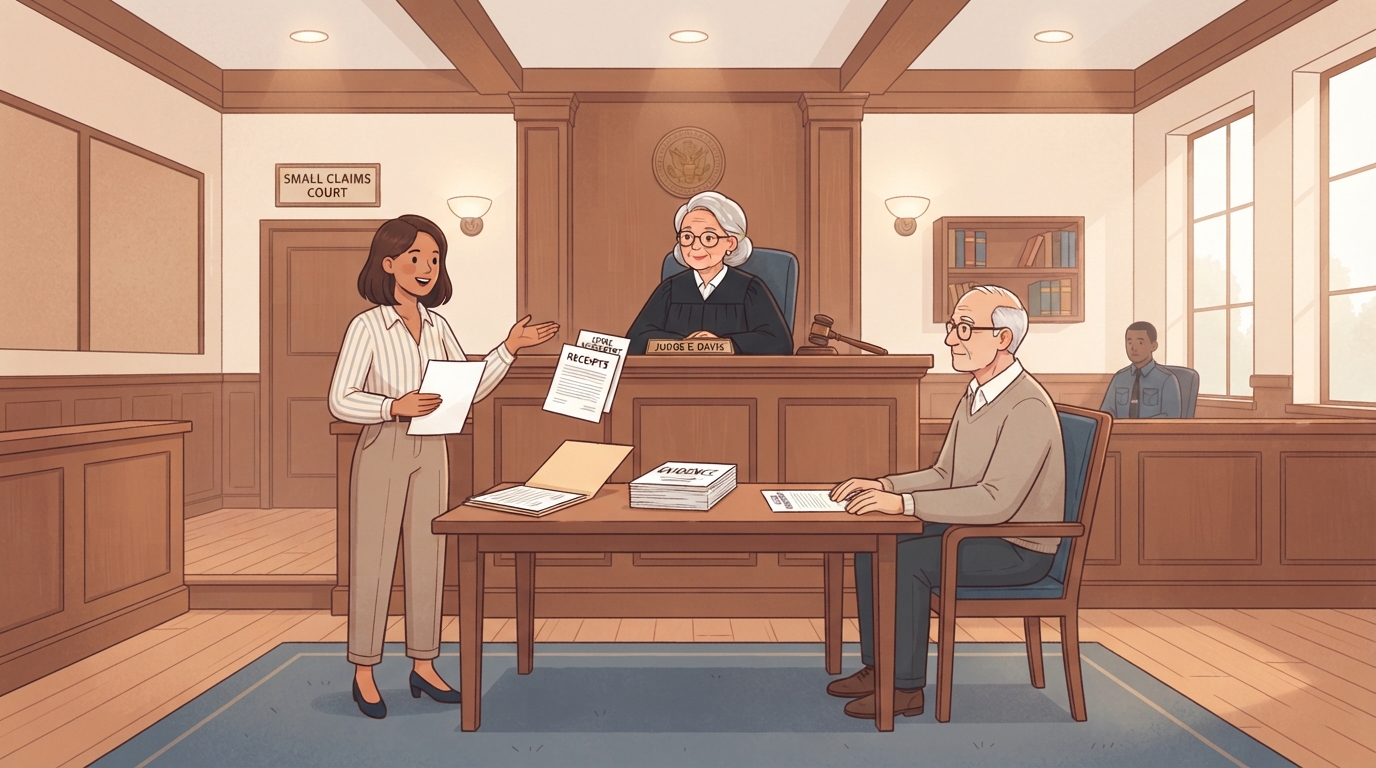
Small claims court was designed for cases like this. Filing fees are low (typically $30 to $100), and you don't need a lawyer. In most small claims courts, lawyers aren't even allowed — it's just you, your landlord, and a judge. If you've been searching for how to sue landlord for security deposit information, the good news is that the process is simpler than you'd expect. But before you get there, exhausting the demand letter process is the smartest path for how to get security deposit back with minimal time and cost.
The process is straightforward, and following it carefully is essential for how to get security deposit back when your landlord refuses to cooperate:
- File your claim at the courthouse where the rental property is located.
- Serve your landlord with the court papers.
- Gather your evidence — lease, photos, demand letter, certified mail receipt.
- Show up on your court date and present your case.
If you're still asking what to do if landlord doesn't return security deposit after your letter, the answer is simple: file the claim. You've done your part by writing a professional demand letter with a clear deadline. Now let the court handle the rest. Knowing how to write a demand letter for security deposit is important, but knowing when to escalate is just as critical.
Most security deposit cases take 15 to 30 minutes. Knowing how to sue landlord for security deposit in small claims court is straightforward: bring organized evidence, state the facts, and let the law do the rest. When you're wondering what to do if landlord doesn't return security deposit after your deadline passes, small claims court is your next logical step — and with your demand letter and certified mail receipt ready, you're already most of the way there.
Organizing Your Case with Claimdra
This is where having everything in one place makes a difference. Claimdra helps you manage all the pieces of your dispute — your demand letter, certified mail tracking, photo evidence, timeline, and court documents — in a single workspace. Instead of juggling spreadsheets and email threads, you get a structured case file ready to present. It's designed to streamline how to get security deposit back by removing the friction of organizing your evidence.
Whether you're writing your first letter or preparing for a court date, having a clear system accelerates how to get security deposit back by keeping every piece of evidence organized and accessible. Explore Claimdra's security deposit demand letter tool to get started with a statute-aware demand letter tailored to your state. If you've already sent your letter and received no response, researching how to sue landlord for security deposit is your next logical step — and Claimdra's case workspace helps you prepare for that too.
Don't Wait Too Long
Every state has a statute of limitations for security deposit claims — typically 1 to 4 years from your move-out date. That sounds like plenty of time, but evidence gets harder to gather the longer you wait. Photos get lost. Witnesses move. Memories fade. If your landlord won't return security deposit, the best time to act was yesterday. The second best time is today. Remember: mastering how to write a demand letter for security deposit is a skill that pays for itself — in many cases, a single well-crafted letter is all it takes to get your money back. And if you follow the steps in this guide, you'll know exactly how to get security deposit back no matter what your landlord says.
How to Get Security Deposit Back: Your Action Plan
Let's summarize the key steps for how to get security deposit back into a simple action plan you can follow right now:
- Check your state's deadline and deduction rules — this gives you the legal foundation for how to get security deposit back.
- Document everything — move-in photos, maintenance records, move-out evidence. Strong documentation is the backbone of how to get security deposit back.
- Write a demand letter citing your state's statute and send it via certified mail with return receipt.
- Wait for the response window — most landlords will pay after receiving a properly formatted letter.
- Escalate to small claims court if your landlord ignores your demand.
Following this plan is the most reliable approach for how to get security deposit back without hiring a lawyer or spending months in litigation. Every step builds on the previous one, and each one brings you closer to getting your money returned.
Frequently Asked Questions
How long does a landlord have to return a security deposit?
It depends on your state. California gives 21 days. Texas gives 30 days. New York gives 14 days. Florida gives 15 or 30 days depending on whether deductions are involved. Always check your specific state statute for the exact deadline. Knowing these deadlines is the first step in how to get security deposit back effectively.
What can a landlord deduct from a security deposit?
Unpaid rent, damage beyond normal wear and tear, and excessive cleaning. They cannot deduct for normal wear and tear (faded paint, minor scuffs, worn carpet), pre-existing damage, or routine maintenance unless specified in your lease. Understanding these rules is essential for how to get security deposit back when your landlord makes questionable deductions.
Is a demand letter required before filing in small claims court?
In many states, yes — or at least strongly recommended. A demand letter shows the court you tried to resolve the dispute before suing. Even where not required, judges view it favorably. Sending one is a strategic step in how to get security deposit back without unnecessary legal costs.
How do I send a demand letter to my landlord?
Via certified mail with return receipt requested at any USPS post office. Cost is about $7 to $10. Keep the green return receipt card — it's your proof of delivery. This simple step dramatically improves your odds of how to get security deposit back by creating an undeniable paper trail.
What happens if my landlord ignores my demand letter?
File a claim in small claims court. Your demand letter and certified mail receipt become the foundation of your case. A landlord who ignores a properly sent demand letter is at a major disadvantage in court. Persistence is key for how to get security deposit back — don't let silence discourage you.